|
SUMMARY
Learning how to edit an essay helps improve clarity, structure, grammar, and argument quality. Strong editing involves revising ideas, refining organization, and proofreading for accuracy and correctness. This guide explains the complete essay editing and revision process, including structural editing, proofreading techniques, and practical ways to improve readability. It also shows how to strengthen your essay without making the writing sound robotic, repetitive, or overly artificial.
|
Key Takeaways
- Editing improves clarity, coherence, structure, and overall readability.
- Focusing on revision will allow for a more organized approach to organizing ideas and information before beginning any grammar corrections.
- Proofreading should happen last to catch spelling, punctuation, and formatting mistakes.
- Strong essays remove redundancies, weak transitions, and logical fallacies during revision.
- Citation checks are essential for plagiarism prevention and academic accuracy.
- Editing in multiple focused passes works better than trying to fix everything at once.
- Effective editing should make writing clearer and more precise without sounding robotic or overly repetitive.
Many students finish writing an essay and submit it without properly reviewing the draft. Even strong ideas can lose marks when the structure feels unclear, the argument lacks flow, or the writing sounds repetitive and inconsistent.
Learning how to edit an essay is an important part of academic writing. Editing is not only about fixing grammar mistakes. A strong essay editing and revision process improves clarity, organization, readability, logical consistency, and citation accuracy while helping writers strengthen their thesis and refine paragraph flow.
Finishing a draft isn’t enough; revision is where the quality of an essay is defined. When students struggle to improve structure and clarity, DoWriteMyEssay helps turn rough drafts into well-organized, polished essays.
Strong editing should also keep writing natural and clear, instead of overly robotic or repetitive.
To edit an essay effectively, you first need to understand what it means to edit an essay and the difference between revising ideas, editing sentences, and proofreading for technical mistakes.
What Does It Mean to Edit an Essay?
Editing an essay means improving the overall quality of your writing before submission. This process involves refining clarity, structure, sentence flow, grammar, coherence, and logical consistency so the essay becomes easier to read and academically stronger.
Many students confuse revising, editing, and proofreading, but these stages focus on different parts of the writing process. Understanding the difference helps you edit more effectively instead of trying to fix everything at once.
Editing vs Revising vs Proofreading
| Process | What You Focus On | Main Goal | Example |
| Revising | Ideas, argument quality, structure, thesis, paragraph order | Improve the overall content and logic of the essay | Rewriting a weak thesis statement or reorganizing body paragraphs |
| Editing | Clarity, sentence flow, tone, readability, word choice, coherence | Make the writing clearer and easier to follow | Removing redundancies, improving transitions, or changing passive voice |
| Proofreading | Grammar, spelling, punctuation, formatting, citation mistakes | Catch small technical errors before submission | Fixing comma errors, typos, MLA formatting, or citation inconsistencies |
Revising usually happens first because fixing grammar is pointless if the argument and structure are still weak. Editing comes after revision to improve clarity and flow, while proofreading is the final step that checks technical accuracy and correctness before submission.
Understanding the difference between revising, editing, and proofreading is important, but knowing why each stage matters is what actually improves the quality of an academic essay.
Why Editing Matters in Academic Writing?
Strong editing improves much more than grammar. It helps writers strengthen arguments, improve paragraph flow, clarify weak ideas, and create better logical consistency throughout the essay. Even a well-researched essay can feel confusing if the structure is weak or the writing lacks coherence.
A proper essay editing and revision process also improves readability by removing redundancies, fixing awkward transitions, refining tone, and making sentences more precise. This is especially important in academic writing, where clarity and organization directly affect how arguments are understood.
Editing also helps identify problems that students often miss during drafting, including logical fallacies, repetitive wording, unsupported claims, inconsistent formatting, and citation mistakes. Instead of trying to fix everything at once, experienced writers usually edit in multiple focused passes to improve one area at a time.
Most importantly, strong editing helps an essay sound clear and natural without becoming overly robotic or artificially formal.
Once you understand why editing matters, the next step is preparing your essay properly before starting the revision process.
Pre-Editing Checklist: What to Do Before You Start Editing
Before making any revisions, it is important to prepare your essay properly. Many students begin editing immediately after finishing the draft, which makes it harder to notice weak structure, repetition, unclear arguments, and grammatical mistakes. A simple pre-editing checklist helps you review the essay more objectively and makes the editing process more effective.

Step Away From the Draft Before Editing
Editing immediately after writing usually leads to overlooked mistakes because you already know what you intended to say. Taking a short break before reviewing the essay helps you notice awkward sentences, unclear ideas, and weak transitions more easily.
Even a short gap of a few hours can improve focus and readability during revision.
Read the Assignment Instructions Again
Before editing, review the assignment requirements carefully. A large proportion of essays lose marks because of unintended omissions, including formatting instructions, citation styles, the number of words in an essay, etc.
This step helps ensure the essay still aligns with the original objective before you start refining details.
Compare Your Essay Against the Rubric
A strong essay editing and revision process should always include a rubric review. Check whether:
- The thesis answers the prompt clearly
- Each paragraph supports the argument
- The evidence is properly explained
- The structure feels logical and organized
- citations and formatting match academic requirements
Editing an essay according to the rubric helps prioritize the fixes that actually affect grades the most.
Read the Essay Out Loud
Reading the essay aloud is one of the most effective proofreading and editing workflow techniques. It helps identify:
- awkward sentence flow
- repetitive wording
- missing transitions
- unclear phrasing
- overly long sentences
Many readability problems become obvious once the essay is heard instead of being silently read.
Prepare a Focused Editing Checklist
Trying to fix everything at once often creates new mistakes. Strong academic revision strategies usually involve focused revision passes where each review targets one area at a time, such as:
- structure improvement
- clarity enhancement
- grammar correction
- citation accuracy
- proofreading for accuracy and correctness
This approach improves consistency and makes editing more manageable, especially during tight deadlines.
Strong editing always begins with larger structural issues before smaller grammar or wording corrections.
Start by First Getting the Structure Right
When learning how to edit an essay, the structure should always be reviewed before grammar or proofreading. Many students start correcting commas and spelling mistakes too early, even though weak organization, unclear arguments, and poor paragraph flow usually cause bigger academic problems.
Strong structural editing in essays improves coherence, readability, logical consistency, and overall argument quality. It also makes the proofreading and editing workflow much easier later because the essay already follows a clear direction.

Strengthen Your Thesis Statement
A strong thesis is the foundation of effective academic writing. One of the most important parts of learning how to edit an essay step by step is checking whether the thesis clearly answers the prompt and matches the argument developed throughout the essay.
A weak thesis often creates:
- Repetitive body paragraphs
- Unclear direction
- Weak transitions
- Unsupported claims
When you improve the strength of your thesis, it will have better organization as well as help each body paragraph stay centred on the main topic.
Ask yourself:
- Is the thesis specific and clear?
- Does it present a focused argument?
- Do the body paragraphs actually support it?
- Does the conclusion align with it?
If you answered “no” to any of these questions,revise your thesis before continuing to polish your other details.
Improve Essay Structure and Organization
After reviewing the thesis, focus on the overall organization of the essay. Strong structure improvement makes ideas flow naturally instead of feeling disconnected or repetitive.
Check whether:
- Does your introduction connect with your thesis?
- Are your body paragraphs arranged logistically?
- Topic sentences connect to the thesis
- Do your transitions provide a smooth flow rate for the reader?
- Paragraphs stay focused on one main idea
- The conclusion properly closes the argument
Many students spend most of their time editing body paragraphs, but overlook how much the ending affects clarity and coherence. A weak final paragraph can make even a strong essay feel unfinished, which is why reviewing the conclusion carefully is an important part of the editing process. Learning to write an essay conclusion helps you improve argument closure, flow, and overall structure during revision.
Check Paragraph Unity and Flow
Each paragraph should focus on one clear idea connected to the thesis. If multiple unrelated ideas appear in the same paragraph, the essay becomes harder to follow.
During editing, check for:
- repeated ideas
- weak transitions
- paragraphs that feel too long
- sentences that move away from the topic
- inconsistent tone or flow
Improving paragraph unity helps create better coherence, readability, and precision throughout the essay.
Once the structure and organization feel clear, the next step in how to edit an essay is strengthening the logic, evidence, and overall quality of the argument itself.
How to Strengthen Arguments While Editing
The next step in how to edit an essay is improving the quality of the argument itself. A well-structured essay can still feel weak if the reasoning is unclear, the evidence is unsupported, or the analysis lacks depth.
Strong argument refinement improves logical consistency, clarity, and academic credibility while making the essay more convincing overall. During the essay editing and revision process, focus on whether the ideas are properly explained instead of simply adding more words.
Eliminate Logical Fallacies
One of the most important academic revision strategies is identifying weak reasoning during editing. Logical fallacies weaken arguments because they rely on flawed assumptions, emotional reasoning, or unsupported conclusions instead of clear evidence.
Common logical fallacies in academic writing include:
- overgeneralizations
- false comparisons
- emotional appeals without evidence
- circular reasoning
- unsupported assumptions
When learning how to edit an essay effectively, review each major claim carefully and ask:
- Is this argument supported with evidence?
- Does the conclusion logically follow the evidence?
- Is the reasoning objective and balanced?
- Does the paragraph contain excessive opinion?
Removing logical fallacies improves clarity, precision, and overall argument quality.
Consider Counterarguments
Strong academic writing acknowledges opposing viewpoints instead of ignoring them completely. Including counterarguments when reviewing will lead to increased refinement of your overall argument. It will also help demonstrate critical thinking skills and how balanced your analysis is.
During revision, check whether:
- Opposing viewpoints are acknowledged fairly
- Counterarguments are answered clearly
- Evidence supports your response
- The essay sounds balanced instead of one-sided
The above checks help to improve the quality of individual arguments’ coherence and form a more persuasive argument without the use of emotional exaggeration or bias.
Beware of Confirmation Bias
Confirmation bias happens when writers only include evidence that supports their opinion while ignoring information that challenges it. Many students focus only on making their point well-transmitted but fail to take sufficient time to look at all the facts implicating what they are writing about during drafting.
An important part of how to edit an essay step by step is reviewing whether the evidence feels balanced and logically consistent. During editing, ask yourself:
- Did I ignore conflicting evidence?
- Are the sources reliable and relevant?
- Does the essay consider multiple perspectives?
- Is the analysis objective instead of emotionally driven?
By focusing more on the valid evidence and less on the emotional bias; it should help strengthen your academic argument and also help with the overall credibility of your argument.
Strong editing should refine arguments clearly and naturally without using exaggerated or overly dramatic wording that makes the essay feel artificial.
After improving the strength and logic of the argument, the next step in how to edit an essay is refining sentence clarity, readability, and overall writing flow.
Editing for Clarity and Readability
A major part of learning how to edit an essay is improving how clearly the ideas are communicated. Even strong arguments can lose impact if the writing feels repetitive, overly complicated, difficult to follow, or filled with unnecessary wording.
During the essay editing and revision process, focus on making the writing precise, readable, and academically clear without making it sound robotic or overly formal. Strong editing for clarity and structure improves coherence, sentence flow, and readability while helping readers understand the argument more easily.
Use Active Voice Construction
Active voice usually makes academic writing clearer and more direct than passive voice. It helps sentences feel more confident and easier to follow.
For example:
| Weak Passive Voice | Strong Active Voice |
| The argument was explained by the writer. | The writer explained the argument. |
| Several mistakes were made in the essay. | The essay contains several mistakes. |
When learning how to edit an essay effectively, review whether passive voice is making sentences unnecessarily long or unclear. While passive voice is sometimes appropriate in academic writing, overusing it can weaken readability and sentence flow.
Remove Redundancies and Tautologies
Many essays contain repetitive phrases that add length without improving meaning. Strong editing removes redundancies to improve conciseness and clarity.
Examples of weak wording:
- fundamentals
- plans
- unanimous
- repeat again
- conclusion
During structural editing in essays, remove words or phrases that repeat the same idea unnecessarily. This improves readability and makes arguments feel more precise.
Omit Unnecessary Words
One of the best academic revision strategies is reducing wordiness. Students often add extra phrases because they think longer writing sounds more academic, but unnecessary wording usually weakens clarity.
For example:
| Wordy Sentence | Improved Sentence |
| Due to the fact that students are stressed, they struggle academically. | Because students are stressed, they struggle academically. |
| It is important to note that social media affects communication. | Social media affects communication. |
Prune Long Sentences and Paragraphs
Long sentences confuse a reader when they read multiple ideas together without clear transitions. As you edit, check for:
- sentences feel difficult to follow
- paragraphs contain multiple unrelated ideas
- transitions feel unclear
- Punctuation creates confusion
Breaking up longer paragraphs will increase the coherence, readability, and flow of your writing.
Keep Overly Complicated Language in Check
Strong academic writing should sound intelligent without becoming unnecessarily complicated. Many students try to sound formal by using overly complex vocabulary, but this often reduces clarity and precision.
A proper proofreading and editing workflow focuses on communicating ideas clearly instead of forcing difficult wording into every sentence. When writing sounds more natural and direct than exaggerated or too polished, it is usually more successful.
Tailor Your Tone for Academic Writing
An academic tone should sound professional, balanced, and objective without becoming overly emotional or dramatic. During editing, check whether the essay:
- sounds consistent throughout
- avoids slang and casual phrasing
- avoids exaggerated claims
- stays focused on evidence and analysis
- maintains logical consistency
Improving tone adjustment helps the essay feel more credible and academically polished while keeping the writing natural and readable.
Once the writing feels clearer and easier to follow, the next step in how to edit an essay is checking grammar, punctuation, spelling, and technical accuracy through careful proofreading.
How to Proofread Effectively
After revising structure, arguments, and clarity, the final step in how to edit an essay is proofreading. Proofreading focuses on technical accuracy and correctness by identifying grammar, spelling, punctuation, formatting, and citation mistakes before submission.
Many students rush through proofreading or rely entirely on spellcheck tools, which often leaves behind awkward phrasing, punctuation errors, and inconsistent formatting. The effective proofreading and editing process requires careful reading instead of a fast scan.
Check Grammar and Sentence Mechanics
Grammar mistakes can reduce clarity and make academic writing feel unpolished. During proofreading, review:
- sentence structure
- verb tense consistency
- subject-verb agreement
- sentence fragments
- run-on sentences
One of the most effective ways to learn how to proofread effectively is by reading slowly and focusing on one sentence at a time instead of reading for meaning alone.
Watch the Commas and Punctuation
Punctuation affects readability and sentence flow more than many students realize. Missing commas, misplaced apostrophes, and incorrect punctuation can make arguments confusing even when the ideas are strong.
During proofreading for accuracy and correctness, check for:
- comma splices
- missing commas after transitions
- inconsistent quotation marks
- punctuation around citations
- incorrect apostrophe usage
By checking commas and punctuation, you will enhance your writing clarity and readability in addition to the accuracy of your writing overall.
Ensure Consistent Spelling and Formatting
Strong academic writing should stay consistent throughout the essay. During the essay editing and revision process, check whether:
- Spelling style remains consistent
- All headings should be formatted identically
- Font and spacing match assignment requirements
- Citations follow the required style guide
- Capitalization stays uniform
Formatting inconsistencies can make an essay appear rushed even if the argument itself is strong.
Remove Repetition of Ideas and Words
Repeated words and repeated explanations can weaken readability and make writing feel robotic. One important part of how to proofread effectively is identifying phrases or ideas that appear too often throughout the essay.
During proofreading, look for:
- Repeated transition words
- Repetitive sentence openings
- Duplicated explanations
- Unnecessary restatement of ideas
When editing,improving sentence structure without changing the original meaning of the essay increases clarity and can also help create better flow.
Don’t Rely Only on Spellcheck
Tools like Grammarly and Hemingway Editor can help identify grammar issues, readability problems, and sentence complexity, but they cannot fully evaluate argument quality, structure, logical consistency, or academic tone.
Spellcheck tools also miss:
- weak evidence
- awkward transitions
- repetitive analysis
- unclear thesis alignment
- citation problems
To effectively edit your essay, utilize a combination of automatic tools and a detailed human assessment of the essay.
Also, even though it is important to use correct spelling and grammar in writing academically, it is essential to ensure you are accurately using quotations, etc., when referencing other authors/names; otherwise, you run the risk of being accused of plagiarism and/or having credibility issues.
How to Edit Quotes, Citations, and References Correctly
A major part of learning how to edit an essay is reviewing how sources are used throughout the essay. Even a well-written essay can lose credibility if quotations are poorly integrated, citations are inconsistent, or references contain formatting mistakes.
During the essay editing and revision process, carefully check every quotation, paraphrase, and citation to ensure the information is accurate, properly attributed, and aligned with the required citation style.
Attribute Quotations Properly
Quotations should support the argument instead of replacing your analysis. Students often insert quotes without providing an explanation of their relevance, which negatively impacts coherence and flow between paragraphs.
When reviewing quotes during structural editing in essays, check whether:
- The quotation supports the topic sentence
- The source is introduced clearly
- The explanation after the quote connects back to the argument
- The quotation is not unnecessarily long
- Punctuation and citation formatting are correct
Learning how to edit quotes in an essay also means making sure quotations fit naturally into the sentence instead of feeling forced or disconnected.
Verify Facts and References
Strong academic writing depends on accurate evidence and reliable sources. During proofreading for accuracy and correctness, review whether:
- Statistics are accurate
- Dates and names are correct
- Sources are credible
- The references match the corresponding in-text citations
- URLs or DOI links work properly if they were required.
This continued proofreading and editing step ensures better validation of evidence and the overall credibility of the essay.
Double-Check Citations and Avoid Plagiarism
The most important thing you can do as you edit your essay is to check your citations carefully before you turn in your essay. Citation mistakes can create plagiarism risks even when the writer did not intend to copy someone else’s work.
During editing, check for:
- missing citations
- incorrectly paraphrased information
- inconsistent citation formatting
- uncited quotations
- copied wording that is too close to the original source
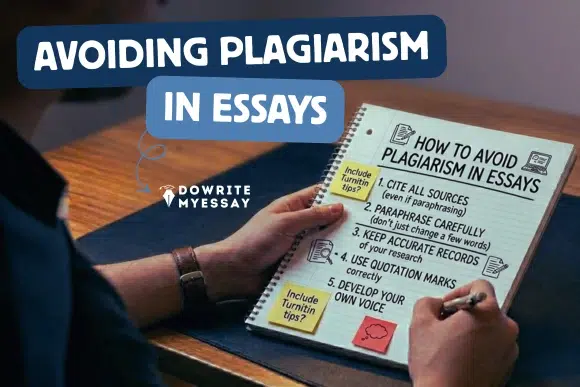
Many students create plagiarism problems by inadvertently paraphrasing too closely, or not attributing the original source completely. Proper citation review is an essential part of academic editing because even small mistakes can affect credibility and originality. Understanding how to avoid plagiarism in essays helps you apply practical strategies for handling sources correctly during revision and proofreading.
Strong editing should improve clarity and originality without relying on exaggerated wording or artificially complex phrasing.
After reviewing citations and references, the next step in how to edit an essay is deciding whether self-editing or outside feedback would improve the final draft further.
Self-Editing vs Peer Editing: Which Should You Use?
An important part of learning how to edit an essay effectively is deciding how the final review process should be handled. Some students prefer self-editing because they understand their own argument best, while others benefit from peer editing because a second reader can identify problems the writer may overlook.
Both approaches can improve the essay editing and revision process when used correctly.
Benefits of Self-Editing
Self-editing gives writers full control over structure improvement, argument refinement, and clarity enhancement. Because you understand the purpose of the essay, it is often easier to identify sections that feel incomplete, repetitive, or poorly organized.
Self-editing is especially useful for:
- thesis strengthening
- checking paragraph flow
- improving logical consistency
- refining tone and readability
- proofreading for accuracy and correctness
One of the best academic revision strategies is completing multiple focused revision passes instead of trying to fix every issue at once. For example, one review can focus on structure, another on clarity, and another on grammar correction.
Learning how to edit an essay step by step through self-editing also helps students become stronger academic writers over time.
Benefits of Peer Editing
Peer editing provides a fresh perspective that can reveal problems the original writer may no longer notice. After reading the same essay repeatedly, writers often overlook awkward transitions, unclear explanations, or repetitive wording because they already understand what they intended to say.
A peer reviewer can help identify:
- unclear arguments
- weak evidence
- inconsistent paragraph flow
- repetitive ideas
- confusing sentence structure
Peer editing is especially helpful during structural editing in essays because outside readers experience the essay the same way instructors do.
When Peer Feedback Improves an Essay
When providing feedback as a reviewer on an essay through peer feedback, it’s really more beneficial if you focus on the clarity, coherence and logical consistency of what is being said than it is to only review or correct grammar errors. A strong reviewer should evaluate:
- whether the argument makes sense
- whether transitions feel smooth
- whether the evidence supports the claims
- whether the structure flows logically
- whether the conclusion aligns with the thesis
However, peer editing should support your writing rather than completely change your voice or argument. Good editing enhances an article’s readability and precision while still maintaining its natural flow and authenticity.
Many experienced writers combine self-editing and peer editing because both methods improve different parts of the revision process.
While detailed revision is ideal, students sometimes need faster editing strategies when deadlines become tight or submission time is limited.
How to Edit an Essay Quickly When You’re Out of Time
Sometimes students do not have enough time for a long essay editing and revision process. While careful revision is always better, knowing how to edit an essay quickly can still improve clarity, structure, and readability before submission.
If you are getting close to your deadline and only have minutes to edit your essay, you should focus on making the changes that have the biggest impact on your grade rather than trying to make every word perfect.

Prioritize Structure First
One of the biggest mistakes students make during rushed editing is focusing only on grammar. If the organization is weak, grammar correction alone will not improve the overall quality of the essay.
During quick structural editing in essays, check whether:
- Your thesis statement answers the question you were given.
- The body paragraphs support your thesis statement.
- Transitions connect ideas logically
- The conclusion restates your thesis statement.
- Paragraphs follow a clear order
Even a few structural improvements can make the essay feel much more organized and coherent.
Focus on Thesis and Topic Sentences
If time is limited, prioritize the thesis statement and topic sentences because they control the direction of the entire essay.
A quick way to learn how to edit an essay effectively under pressure is reading only:
- the thesis statement
- topic sentences
- concluding sentences
This helps identify whether the argument flows logically from one point to the next.
Scan for Major Grammar Errors
During rushed proofreading for accuracy and correctness, focus on the mistakes that most affect readability, including:
- sentence fragments
- run-on sentences
- spelling mistakes
- punctuation problems
- repeated words
Do not waste too much time trying to rewrite every sentence perfectly when the deadline is already close.
Check Citations Before Submission
Citation errors can result in extreme academic consequences, even though your essay is generally strong. Therefore, be sure to double-check your citations before submitting your essay, and quickly verify:
- in-text citations
- quotation formatting
- reference page consistency
- citation style requirements
This small review can help prevent avoidable plagiarism or formatting issues.
Read the Introduction and Conclusion Again
The introduction and conclusion strongly affect how instructors evaluate the essay overall. During the final proofreading and editing workflow review, check whether:
- The introduction clearly presents the argument
- The conclusion reinforces the thesis
- Both sections align with the body paragraphs
- The essay ends naturally and does not conclude abruptly.
Strong opening and closing sections improve coherence and help the essay feel complete, even if time is limited.
Quick Editing Tips for Tight Deadlines
If you only have a short amount of time:
- Read the essay aloud
- Shorten overly long sentences
- Remove obvious redundancies
- Fix repeated transition words
- Focus on clarity instead of perfection
- Prioritize high-impact corrections first
Learning how to proofread effectively under pressure is mostly about prioritization of fixes instead of trying to rewrite the entire essay at the last minute.
Whether you have several hours or only a few minutes, certain editing techniques consistently improve essay quality more efficiently than others.
Top Editing Techniques That Improve Essays Faster
Learning how to edit an essay effectively becomes much easier when you use structured editing techniques instead of randomly correcting mistakes. Strong academic revision strategies help writers improve clarity, coherence, readability, and logical consistency more efficiently.
These techniques are especially useful during the essay editing and revision process because they help identify problems students often overlook during normal reading.
Read the Essay Out Loud
Reading aloud is one of the most effective ways to identify awkward sentence flow, repetitive wording, and unclear transitions. Many sentences that look acceptable on screen immediately sound unnatural when spoken.
This technique helps improve:
- readability
- coherence
- sentence flow
- tone consistency
- proofreading for accuracy and correctness
It is also one of the easiest ways to learn how to proofread effectively without relying entirely on grammar tools.
Edit in Multiple Focused Passes
Trying to fix structure, grammar, transitions, citations, and clarity all at once usually leads to missed mistakes. Strong proofreading and editing workflow methods separate editing into focused revision passes.
For example:
- 1st Pass – Reorganize Structure
- 2nd Pass – Improved Arguments
- 3rd Pass – Enhance Clarity
- 4th Pass – Correct Grammar
- 5th Pass – Proofread & Run a Citation Check
This approach improves consistency and makes step-by-step editing of an essay much more manageable.
Print the Essay Before Reviewing
Reading an essay often helps writers notice errors they miss on a screen. Formatting changes can make awkward paragraphs, punctuation problems, and repeated words easier to identify.
This technique is especially useful for:
- structural editing in essays
- spotting repetition
- checking paragraph unity
- identifying long sentences
Change the Font or Text Size
Changing the visual appearance of the essay forces the brain to process the writing differently. This simple trick helps students notice:
- spelling mistakes
- repeated phrases
- punctuation errors
- awkward transitions
Many experienced editors use this method during proofreading for accuracy and correctness because it improves attention to detail.
Track Repeated Words Manually
One common editing problem is repeating the same transition words, sentence openings, or descriptive phrases too often. During revision, check for words that appear repeatedly across paragraphs.
This helps improve:
- conciseness
- readability
- sentence variety
- overall writing flow
Strong editing should improve clarity naturally instead of making the writing feel repetitive or artificially polished.
Use Editing Checklists
Editing checklists helps writers stay organized and avoid missing important corrections during revision.
A strong checklist should include:
- thesis clarity
- paragraph organization
- transition quality
- grammar correction
- citation accuracy
- formatting consistency
- plagiarism prevention
Using checklists is one of the best revision and proofreading practices because it keeps the editing process systematic and focused.
Even students who spend significant time revising often repeat the same editing mistakes that weaken clarity, coherence, and argument quality.
Common Essay Editing Mistakes Students Should Avoid
Many students spend hours revising their essays, but still lose marks because of avoidable editing mistakes. Learning how to edit an essay effectively is not only about adding improvements. It is also about recognizing the habits that weaken clarity, coherence, readability, and logical consistency during the revision process.
Avoiding these mistakes can make the essay editing and revision process more efficient and improve the overall quality of academic writing.
Editing Immediately After Writing
One of the most common mistakes is proofreading immediately after finishing the draft. When students already know what they intend to say, the brain often skips over awkward phrasing, missing words, and structural problems.
Taking a short break before editing helps writers review the essay more objectively and improves proofreading for accuracy and correctness.
Focusing Only on Grammar
Many students think editing only means fixing grammar mistakes, but grammar correction alone cannot repair weak arguments, poor structure, or unclear organization.
Strong structural editing in essays should happen before sentence-level proofreading. Always focus on:
- thesis clarity
- paragraph flow
- logical consistency
- evidence quality
- transition strength
before worrying about smaller punctuation issues.
Ignoring Paragraph Flow and Transitions
Weak transitions make essays feel disconnected even when the ideas themselves are strong. During revision, check whether paragraphs connect logically and whether each idea flows naturally into the next.
Poor paragraph flow often creates:
- repetition
- abrupt topic shifts
- unclear argument progression
- weak coherence
Improving transitions is an important part of how to edit an essay step by step because it helps readers follow the discussion more easily.
Overusing Spellcheck Tools
Tools like Grammarly can help identify grammar problems, but they cannot fully evaluate argument refinement, logical consistency, or academic tone.
Overrelying on automated corrections can create:
- awkward sentence rewrites
- unnatural phrasing
- inconsistent tone
- robotic wording
Strong editing should improve readability while keeping the writing natural and clear, instead of overly artificial.
Repeating Ideas and Words Too Often
Repetition weakens readability and makes essays feel less polished. During the proofreading and editing workflow, review whether:
- Transition words repeat too frequently
- Examples repeat the same point
- Multiple paragraphs explain identical ideas
- Too many opening sentences that are too similar in construction/wording
Improving sentence variety and conciseness helps create stronger coherence and flow.
Ignoring Citation and Formatting Problems
Many students focus heavily on content revision but forget to review citations, formatting alignment, and reference consistency before submission.
During the final editing phase of your essay, check for:
- citation style consistency
- in-text citation formatting
- Reference page accuracy
- spacing and heading structure
- plagiarism risks
Small formatting errors can diminish your professionalism even though your writing is of high standard.
A useful way to evaluate the overall quality of an edited essay is by applying a simple academic editing framework that focuses on clarity, coherence, consistency, correctness, and conciseness.
What Are the 5 C’s in Editing?
The 5 C’s in editing are a simple academic writing framework used to evaluate whether an essay feels clear, organized, accurate, and easy to read. When learning how to edit an essay effectively, these five principles help writers focus on the areas that most affect readability and overall academic quality.
Applying the 5 C’s during the essay editing and revision process can improve coherence, structure improvement, logical consistency, and proofreading accuracy without making the writing feel overly complicated or robotic.
| C’s | Meaning | What to Check During Editing |
| Clarity | Ideas should be easy to understand | Remove vague wording, confusing sentences, and unnecessary complexity |
| Coherence | Ideas should flow logically | Improve transitions, paragraph order, and argument progression |
| Consistency | Formatting, tone, and style should match throughout | Check citation style, spelling, headings, and sentence style |
| Correctness | Grammar and factual details should be accurate | Review punctuation, spelling, citations, and evidence |
| Conciseness | Writing should avoid unnecessary wording | Remove redundancies, filler phrases, and repeated ideas |
Clarity
Strong academic writing should communicate ideas directly and naturally. During structural editing in essays, review whether the argument is easy to follow and whether sentences clearly explain the intended meaning.
Clarity enhancement often involves:
- simplifying awkward phrasing
- shortening overly long sentences
- improving topic sentence precision
- removing vague language
One important part of how to proofread effectively is identifying sentences that technically sound correct but still feel difficult to understand.
Coherence
Coherence looks at the flow of the essay in terms of how the ideas connect throughout the essay. While revising the essay check whether:
- Paragraphs follow a logical order
- Transitions connect ideas naturally
- Evidence supports the argument consistently
- The conclusion aligns with the thesis
Strong coherence improves readability and helps the essay feel organized instead of disconnected.
Consistency
Consistency is essential during the proofreading and editing workflow because small formatting or style changes can make essays appear rushed or unpolished.
Check whether:
- Citation formatting stays consistent
- Spelling style matches throughout
- The headings stay consistent throughout the essay
- Tone remains academically appropriate
- The verb tense stays consistent throughout the essay
Learning how to edit an essay step by step includes reviewing these details carefully during the final editing passes.
Correctness
Correctness focuses on technical accuracy and factual reliability. During proofreading for accuracy and correctness, review:
- grammar
- punctuation
- spelling
- citation accuracy
- factual claims
- quotation formatting
This stage helps improve professionalism and academic credibility.
Conciseness
Concise writing communicates ideas efficiently without unnecessary repetition or filler wording. Many students believe longer sentences sound smarter, but excessive wording usually reduces readability and precision.
Strong editing removes:
- redundancies
- repeated explanations
- unnecessary transitions
- Overly lengthy or complicated phrases
Effective editing provides clarity and fluency and does not create exaggeration or overly polished writing.
After applying the 5 C’s, the final step in how to edit an essay is completing one last review before submission to ensure no major problems were overlooked.
Final Essay Editing Checklist Before Submission
Before submitting your essay, complete one final review to make sure the essay feels clear, organized, and technically accurate. Even after a strong essay editing and revision process, small mistakes can still affect readability, coherence, formatting, and overall academic quality.
Using a final checklist is one of the most effective academic revision strategies because it helps writers review the essay systematically instead of randomly searching for mistakes.
Structure and Argument Checklist
Before proofreading sentence-level details, check whether:
- The thesis clearly answers the prompt
- Body paragraphs support the main argument
- Topic sentences align with the thesis
- Transitions connect ideas smoothly
- The conclusion aligns with the overall discussion
- Paragraphs follow a logical order
Strong structural editing in essays should improve coherence and make the argument easy to follow from beginning to end.
Clarity and Readability Checklist
During the final editing pass, review whether:
- Sentences sound clear and natural
- Unnecessary wording has been removed
- Repetitive phrases have been reduced
- Passive voice is not overused
- Paragraphs stay focused on one idea
- Tone remains academically appropriate
Editing in order to improve the readability of your essay means that the writing should not sound robotic or overly formal.
Grammar and Proofreading Checklist
A strong proofreading and editing workflow should include careful review of:
- grammar correction
- punctuation consistency
- spelling accuracy
- capitalization consistency
- sentence fragments
- Whether there are run-on sentences
One of the best ways to learn how to proofread effectively is by slowing down during the final review instead of scanning the essay too quickly.
Citation and Formatting Checklist
Prior to submitting your essay, make sure to double-check:
- in-text citations
- reference page formatting
- quotation formatting
- citation style consistency
- spacing and margins
- heading structure
This step improves citation accuracy and helps prevent plagiarism or formatting mistakes.
Final Read-Through
Before submitting, read the essay one final time from beginning to end without stopping to edit every sentence. This helps identify:
- awkward transitions
- repeated ideas
- unclear argument flow
- missing words
- inconsistent tone
Strong editing should make the essay feel natural, organized, and precise instead of repetitive or artificially polished.
In some situations, editing alone cannot fully repair deeper structural or argumentative problems within an essay.
When Should You Rewrite Instead of Edit?
Learning how to edit an essay effectively also means recognizing when editing is no longer enough. Some problems cannot be fixed with small revisions because the structure, argument, or overall direction of the essay is too weak from the beginning.
In these situations, rewriting parts of the essay is usually more effective than endlessly correcting sentences one by one.
When the Thesis Is Too Weak or Unclear
A weak thesis creates problems throughout the entire essay. If the main argument feels vague, unfocused, or inconsistent with the body paragraphs, simple editing may not fully solve the issue.
During the essay editing and revision process, rewriting becomes necessary when:
- The thesis does not answer the prompt clearly
- Body paragraphs discuss unrelated ideas
- The argument changes direction repeatedly
- The essay lacks a clear position
Strong thesis strengthening sometimes requires rewriting introductions, topic sentences, or entire sections to improve logical consistency and coherence.
When Paragraphs Lack Organization
If paragraphs feel disconnected, repetitive, or randomly ordered, structural editing in essays may require major reorganization instead of minor sentence-level corrections.
Revising is necessary when:
- Transitions feel abrupt
- Ideas repeat across multiple paragraphs
- Evidence appears in the wrong sections
- The paragraph flow feels confusing
- The conclusion does not align with the discussion
Strong structure improvement focuses on rebuilding the argument logically instead of forcing weak organization to work.
When Evidence and Analysis Feel Incomplete
Some essays contain enough information but not enough explanation or analysis. In these cases, proofreading for accuracy and correctness alone will not improve the overall quality of the essay.
You may need to rewrite sections when:
- The evidence is not explained clearly
- Examples feel unrelated to the thesis
- The analysis stays too shallow
- Claims lack support
- Counterarguments are missing
Effective argument refinement often requires expanding or rebuilding sections to improve clarity and depth.
When the Writing Sounds Forced or Artificial
One common problem during heavy editing is overcorrecting sentences until the writing sounds unnatural. Strong academic writing should sound clear, readable, and precise without becoming robotic or overly polished.
Overusing filler transitions, exaggerated wording, or unnecessarily complex phrasing can weaken readability and make the essay feel artificial instead of professional.
If multiple sections feel awkward, no matter how much editing you do, rewriting those sections completely is often the better solution.
Rewrite Strategically Instead of Restarting Everything
Rewriting does not always mean starting over completely. In many cases, revising:
- The introduction
- Thesis statement
- Topic sentences
- Weak body paragraphs
- Conclusion
can significantly improve the essay without rewriting the full essay.
However, if multiple sections require extensive reconstruction, starting over may be more efficient than repeatedly trying to repair weak content. When time is limited or the essay needs major improvements before a deadline, some students choose to purchase an essay online that is built around a clear structure, well-developed arguments, and proper academic formatting, giving them a stronger foundation to work from instead of struggling with a draft that requires extensive rewriting.
Learning how to edit an essay step by step also means recognizing which parts need refinement and which require complete reconstruction. Making that distinction can save time and lead to a stronger final paper.
Whether you are revising a rough draft or polishing a nearly finished essay, strong editing remains one of the most important parts of academic writing.
Conclusion: Why Strong Editing Is Essential for Essay Writing
Learning how to edit an essay is one of the most important academic writing skills students can develop. Strong editing improves far more than grammar. It strengthens structure, clarity, coherence, readability, logical consistency, and overall argument quality.
A complete essay editing and revision process involves multiple stages, including revising ideas, improving organization, refining arguments, proofreading for accuracy and correctness, and reviewing citations carefully before submission. Effective editing also helps writers identify weak transitions, repetitive wording, unsupported claims, formatting inconsistencies, and logical fallacies that can weaken academic writing.
Throughout this guide, you learned how to:
- strengthen thesis statements
- improve essay structure and organization during editing
- refine clarity and readability
- Use effective proofreading and editing workflow techniques
- avoid plagiarism and citation mistakes
- apply academic revision strategies more efficiently
Strong editing should make writing clearer, more precise, and easier to follow without making it sound robotic, repetitive, or artificially formal.
Instead of treating editing as a final quick step, approach it as part of the writing process itself. The more carefully you revise, edit, and proofread, the stronger and more professional your academic writing will become.
Frequently Asked Questions About Editing an Essay
Ready to polish your draft? These quick answers cover the most common questions students ask when proofreading and revising an essay.
How do you edit an essay step by step?
What is the difference between revising, editing, and proofreading?
How can I proofread my essay effectively?
What should I check first when editing an essay?
How do I improve essay structure during editing?
- paragraphs follow a logical order
- Topic sentences support the thesis
- Transitions connect ideas clearly
- The conclusion aligns with the discussion
What are the best essay editing techniques?
- reading the essay aloud
- editing in multiple focused passes
- shortening overly long sentences
- reviewing paragraph unity
- checking transitions carefully
- using editing checklists
What are the most common essay editing mistakes?
- focusing only on grammar
- editing immediately after writing
- ignoring structural problems
- overusing spellcheck tools
- repeating ideas too often
- failing to review citations carefully